AI Agents vs AI Assistants: What’s the Difference?
AI products increasingly use the words “agent” and “assistant” for systems with very different powers, making product labels alone unreliable.
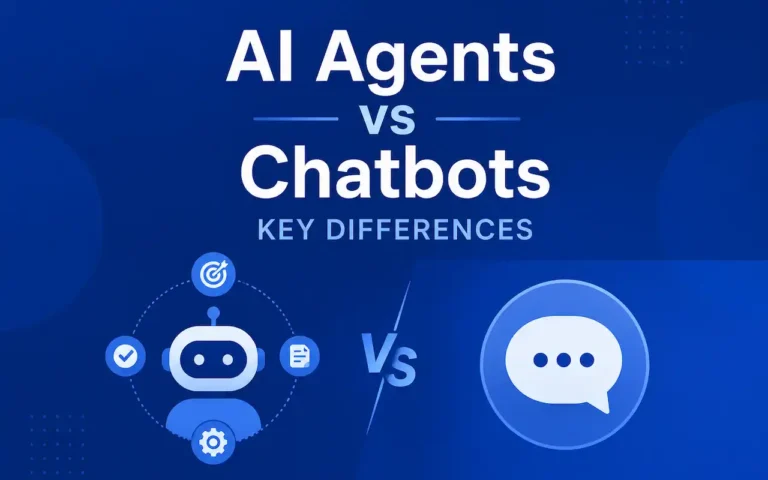
An AI assistant primarily helps a person complete tasks, while an AI agent can plan and execute multiple actions toward a defined goal with less step-by-step direction.
It is what separates AI that recommends the next action from AI that may take that action. It is why autonomy, permissions and human approval matter more than the name attached to the product.
The categories can overlap. An assistant may contain agent capabilities, and an agent may communicate through an assistant-style interface. The most reliable way to distinguish them is to examine who controls the workflow, what the system can change and when a human must intervene.
Key Takeaways
- AI assistants usually respond to instructions while leaving the user in control of the workflow.
- AI agents can decide which steps and tools are needed to pursue a defined goal.
- Tool access alone does not make an AI system an agent. Control over workflow execution is the stronger test.
- “Assistant” often describes the system’s relationship with a user, while “agent” describes how it operates.
- Assistants and agents can work together, with an assistant managing interaction and agents performing bounded tasks behind the scenes.
- Greater autonomy can cover more of a workflow, but it also requires stronger permissions, monitoring and human-oversight controls.
What Is the Difference Between AI Agents and AI Assistants?
An AI assistant responds to a user’s instructions and helps complete individual or guided tasks. An AI agent receives a goal, determines which steps are required and uses approved tools to complete a multistep workflow. The key difference is control: the user directs an assistant, while an agent controls more of the execution process.
This is a useful starting point, but not a universal classification rule. The IBM comparison of AI agents and AI assistants characterizes assistants as primarily reactive and agents as more proactive and autonomous. Google Cloud describes assistants as user-collaborative applications that may also contain agent capabilities while keeping users involved in decisions.
The better question is therefore not simply, “Is this an agent or an assistant?” It is:
How much decision-making and action authority has the system been given?
| Dimension | AI assistant | AI agent |
| Primary role | Helps a person perform work | Pursues a goal on a user’s behalf |
| Typical trigger | User prompt or command | Goal, event, schedule or system signal |
| Workflow control | Mainly controlled by the user | Partly controlled by the system |
| Task scope | Individual or guided tasks | Often a multistep workflow |
| Planning | Limited or user-directed | Can generate and revise a plan |
| Tool use | Uses tools when instructed or approved | Selects tools as the workflow develops |
| Human involvement | Frequent interaction | Checkpoints, exceptions and review |
| Persistence | Often one interaction or session | May continue until a stopping condition |
| External actions | Commonly limited or approval-based | May update connected systems within defined permissions |
| Main risk | Incorrect or misleading output | Incorrect output plus harmful or unauthorized action |
These are tendencies rather than fixed definitions. A capable assistant may take approved actions, while a tightly constrained agent may operate inside a narrow process.
What Is an AI Assistant?
An AI assistant is a system designed to collaborate directly with a user, commonly through natural-language instructions or another interactive interface.
Its purpose is to make the user more effective. It may answer questions, summarize documents, retrieve records, create content, analyze information or suggest next steps. Advanced assistants can also remember context and connect to external tools.
The defining characteristic is the user’s role in directing the work. The human normally determines the next meaningful step, evaluates the output and decides whether an action should proceed.
A typical assistant interaction follows a simple pattern. The user makes a request, the assistant interprets it and produces an answer or proposed action. The user then reviews the result and either uses it, changes it or gives another instruction.
For example, an email assistant might identify unanswered messages, draft replies and ask the user to approve them. It may use several AI capabilities, but the user remains the workflow manager.
AI assistants are well suited to drafting, summarization, research support, document analysis, knowledge retrieval and decision support. They are particularly useful when professional judgment, context or subjective choice must remain with the user.
What Is an AI Agent?
An AI agent is a system that can pursue a defined goal by selecting and performing actions within an environment.
The Microsoft AI agent definition describes an agent as a system that takes action based on inputs from its environment to achieve a set goal. Agents can range from simple rule-based programs to adaptive AI systems.
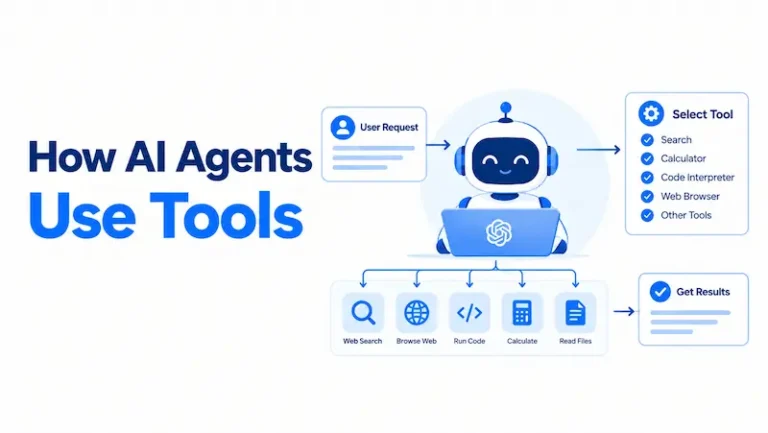
In modern generative AI applications, an agent commonly combines a model, tools and operating instructions. The model interprets the goal and manages parts of the workflow. Tools allow the system to retrieve information or affect external systems. Instructions and guardrails define what it should and should not do. These components are also outlined in OpenAI’s guide to building AI agents.
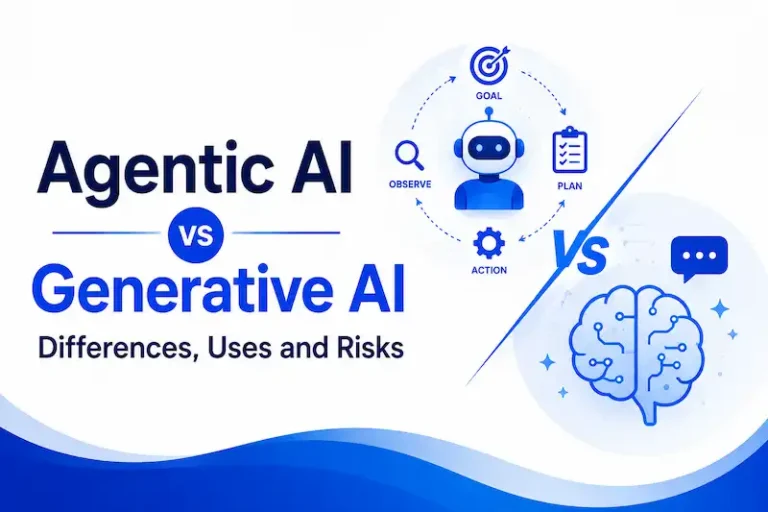
A generative AI agent commonly works through a repeating cycle:
- It interprets the goal and current state.
- It decides which action or subtask should come next.
- It selects an available tool.
- It observes the result returned by that tool.
- It evaluates whether the goal has been achieved.
- It continues, revises its approach, stops or escalates to a human.
This loop is a stronger indicator of agency than sophisticated language generation. A chatbot that produces an excellent answer in one response is not necessarily an agent. A less conversational system that monitors events, selects actions and updates records may be one.
Agents are most useful where the route from request to completion cannot be fully specified in advance. Examples include triaging support cases, investigating operational alerts, coordinating multistep research and handling workflow exceptions across connected applications.
Six Key Differences Between AI Agents and AI Assistants
1. Instructions vs Goals
An assistant usually receives a bounded instruction such as “summarize this report” or “draft a response.” The requested output defines the completion point.
An agent receives a broader objective such as “investigate this service interruption” or “resolve eligible support cases.” It may decide which tasks, tools and intermediate actions are needed to achieve that goal.
Both systems still need human-defined objectives and boundaries. An agent does not create legitimate organizational authority for itself.
2. User-Controlled vs Model-Directed Steps
An assistant generally waits for the user to decide what happens next. An agent can choose the next permitted action based on the result of the previous step.
This also separates an agent from a fixed AI workflow. Anthropic’s guidance on effective agents distinguishes workflows, where model calls and tools follow predefined code paths, from agents, where a model dynamically directs its process and tool use.
A fixed workflow can be highly automated without being agentic. Automation alone does not establish that AI controls the process.
3. Recommendations vs Actions
Assistants commonly generate information for a person to review. Agents are more likely to affect external systems by sending communications, updating databases, creating tickets or triggering processes.
An assistant can also take actions, but it commonly asks for permission at meaningful points. An agent may act without case-by-case approval when an action falls within its delegated authority.
This distinction changes the risk. An incorrect recommendation can mislead a person. An incorrect action may immediately alter a customer record, expose data or produce a financial consequence.
4. Guided Tasks vs Persistent Execution
Many assistants complete one interaction at a time. They may retain conversational context, but the user remains responsible for continuing the task.
Agents can persist through several cycles of planning, action and observation. Some respond to schedules, queues or environmental events instead of waiting for another human prompt.
Persistence still needs explicit limits. A controlled agent should know what completion means, how long it may continue, how many times it can retry and when it must transfer control.
5. Output Review vs Operational Oversight
With an assistant, a person commonly reviews individual outputs. With an agent, oversight may occur through approval gates, monitoring, exception handling and post-action review.
The right control depends on the consequence of the action. Reading public information does not require the same review as deleting data, changing permissions, issuing a refund or sending an external communication.
6. Advice Risk vs Execution Risk
Both assistants and agents can produce inaccurate, biased or inappropriate outputs. Agents add execution risk because those outputs can influence tool selection and real-world actions.
The more systems an agent can access and the more independently it can act, the more important authentication, authorization, monitoring and recovery become.
Examples of AI Assistants and AI Agents
Familiar products should not always be classified permanently as assistants or agents. Their role can change according to the mode, integrations, permissions and tools enabled for a particular task.
| System configuration | Likely classification | Reason |
| Chat interface answering a question | Assistant | Responds to a bounded prompt |
| Writing tool suggesting revisions | Assistant | User decides whether to apply changes |
| Coding tool proposing a code change | Assistant | Human controls implementation |
| Coding system editing files and running tests | Agent | Controls several execution steps |
| Support tool drafting a reply | Assistant | Employee reviews and sends it |
| Support system resolving eligible cases | Agent | Executes a bounded workflow |
| Monitoring system that investigates new alerts | Agent | Responds to events and selects actions |
| Assistant coordinating background agents | Hybrid system | User interaction and execution are separated |
This is why describing an entire product as “an assistant” or “an agent” can be misleading. The same interface may provide low-autonomy assistance in one task and activate an agentic workflow in another.
How AI Assistants and AI Agents Work Together
Assistants and agents are not necessarily competing product categories. They can be different layers of the same system.
The assistant acts as the user-facing layer. It helps the user express a goal, supplies relevant context, asks for missing information and communicates progress. One or more agents can then operate behind that interface, selecting tools and completing bounded parts of the workflow.
For example, a user may ask an assistant to prepare a market briefing. A research agent could identify and retrieve relevant sources, an analysis agent could organize findings and the assistant could present the result for review. The user experiences one conversation even though several components participate in execution.
This arrangement can preserve a clear point of human interaction while allowing greater workflow coverage behind the scenes. It also requires clear handoff rules. The system should disclose when it plans to act, pause for approval where necessary and identify conditions that require human judgment.
AI Agent or AI Assistant: Which Should You Choose?
Choose based on the task, not on which label sounds more advanced.
| Workflow condition | Better starting point | Reason |
| Human judgment determines the outcome | Assistant | Keeps the decision with the user |
| Work is mainly drafting or summarization | Assistant | Greater autonomy adds little value |
| Steps are stable and predictable | Conventional automation | Deterministic logic may be easier to test |
| Steps vary with incoming information | Agent | Adaptive planning can cover exceptions |
| Task crosses several systems | Bounded agent | Can coordinate multistep execution |
| Actions are difficult to reverse | Assistant or approval-gated agent | Human review reduces execution risk |
| Errors could affect rights, safety or finances | Closely supervised system | Consequences demand stronger controls |
| Volume is high but exceptions are uncommon | Bounded agent | Routine cases can be completed and exceptions escalated |
| Policies or underlying data are unreliable | Neither yet | Automation will reproduce those weaknesses |
An assistant is usually the clearer starting point when work is exploratory, subjective or dependent on professional judgment. It also makes sense when reliable approval rules have not been established or the organization is still learning how users interact with the system.
An agent becomes more useful when a goal requires several variable steps, the necessary information is distributed across tools and the system must respond to intermediate results without continuous prompting. OpenAI’s agent guidance suggests considering agents for complex decisions, difficult-to-maintain rules and work involving substantial unstructured data. It also notes that a deterministic solution may be sufficient when those conditions are absent.
Three questions can help classify the requirement:
- Who decides the next step? If the user decides, the system behaves more like an assistant. If the model decides, the system has more agency.
- What can the system change? Read-only access creates less exposure than permission to send, purchase, approve, modify or delete.
- How long can it continue? A single response is different from a system that can keep operating until it decides the goal is complete.
If the answers indicate substantial model-directed planning, consequential write access and persistent operation, the system should be governed as an agent even if its product name includes the word “assistant.”
Worked Example: Handling a Customer Refund
Consider this hypothetical customer-service scenario.
A customer reports receiving a damaged item and requests a refund.
An AI assistant retrieves the relevant policy, summarizes the order history and drafts a response. It may recommend a refund, but an employee verifies the evidence, authorizes the decision and sends the message.
An AI agent could inspect the order, check delivery information, request missing evidence, apply the refund policy, determine eligibility, issue a refund within an approved limit, update the customer record and send confirmation. It would escalate the case if the evidence conflicted, the amount exceeded its authority or the customer challenged the outcome.
| Workflow stage | Assistant model | Agent model |
| Retrieve order | Retrieves it when asked | Selects retrieval as a required step |
| Review policy | Summarizes it for an employee | Applies it within defined rules |
| Decide eligibility | Recommends an outcome | May decide within delegated limits |
| Issue refund | Human authorizes the action | Executes if conditions are satisfied |
| Update systems | Employee completes updates | Updates connected records |
| Handle exceptions | Waits for user direction | Escalates under defined conditions |
Neither design is inherently better. The assistant provides stronger case-by-case human control. The agent covers more of the workflow but requires clear limits, tested integrations, audit logs and reliable escalation routes.
Costs and Operational Trade-Offs
Agents can reduce manual handoffs, but greater autonomy introduces additional cost and operational complexity.
| Consideration | Assistant | Agent |
| Implementation | Usually simpler | Requires workflow and tool integration |
| Model usage | Often fewer interactions | May require repeated reasoning cycles |
| Testing | Focuses on output quality | Must also test actions and tool selection |
| Monitoring | Reviews user-facing outputs | Tracks intermediate decisions and actions |
| Failure recovery | User corrects or retries | Needs stopping, rollback and escalation paths |
| Security | Protects data and user access | Also limits tool permissions and execution scope |
Agentic systems may exchange greater latency and operating cost for flexibility, a trade-off also highlighted in Anthropic’s guidance. Variable execution paths can make evaluation more demanding because teams must inspect not only the final answer but also tool selection, intermediate decisions, retry behavior and stopping conditions.
The relevant question is not which option is more advanced. It is whether the additional autonomy produces enough value to justify the additional control and maintenance requirements.
Why AI Agents Require Stronger Controls
AI agents inherit risks associated with generative AI, including inaccurate output, bias, privacy exposure and inappropriate content. Their access to tools can turn an unreliable output into an operational action.
Prompt injection is one example. An agent may encounter malicious instructions inside a webpage, document, email or tool response and mistake them for legitimate directions. If it also has broad permissions, the error could lead to unauthorized disclosure or modification.
The OWASP guidance on excessive agency identifies excessive functionality, excessive permissions and excessive autonomy as common root causes of harmful actions. It recommends limiting tools and permissions, enforcing authorization in downstream systems and requiring human approval for high-impact actions.
Organizations can apply these principles through a defined control sequence:
- Define the goal and boundary. State what the agent is responsible for and what remains outside its role.
- Map every tool and permission. Record what the system can read, create, modify, send or delete. Remove capabilities that are not necessary.
- Classify actions by consequence. Separate low-impact, reversible actions from actions affecting finances, rights, privacy, safety or legal obligations.
- Add approval gates. Require informed human approval before sensitive or difficult-to-reverse actions.
- Define stopping conditions. Set attempt, time, cost and authority limits, along with clear escalation triggers.
- Test the entire workflow. Evaluate normal cases, conflicting data, unavailable tools, partial failures and malicious inputs.
- Monitor operation. Record tool calls, approvals, failures, overrides and outcomes so controls can be improved.
The NIST Generative AI Profile provides a cross-sector resource for incorporating trustworthiness considerations into the design, development, use and evaluation of generative AI systems. It is not an agent-specific standard, but it offers an established foundation for managing many of the risks that agents inherit from generative AI.
Common Selection and Deployment Mistakes
| Mistake | Why it fails | Better approach |
| Trusting the product label | Terminology differs across vendors | Inspect actual behavior and permissions |
| Treating tool access as proof of agency | Assistants can also call tools | Examine who controls workflow execution |
| Automating every available step | Capability does not prove suitability | Automate only where value justifies risk |
| Giving broad permissions for convenience | One error can affect several systems | Apply least privilege |
| Relying on the model for authorization | Model output is not a security boundary | Enforce rules in downstream systems |
| Using approval for every action | Excessive friction removes the benefit | Match approval to consequence |
| Measuring only final-answer quality | Good outputs can hide unsafe processes | Evaluate actions, traces and stopping behavior |
| Starting with many agents | Coordination adds cost and failure points | Begin with the simplest sufficient design |
Conclusion
The difference between AI agents and AI assistants is primarily a difference in delegated control.
An assistant helps a person decide and act. An agent can decide parts of the process and take actions within the authority it has been given. The categories can overlap, so product labels do not reliably explain how a system operates.
Evaluate the observable behavior instead. Determine who chooses the next step, which tools the system can use, what it can change, how long it can operate and where human approval applies.
For drafting, analysis and decision support, an assistant is usually the sensible starting point. For variable, multistep workflows, a bounded agent may provide more value. Begin with the lowest level of autonomy that solves the problem, verify its performance and expand its authority only when the evidence and controls justify doing so.